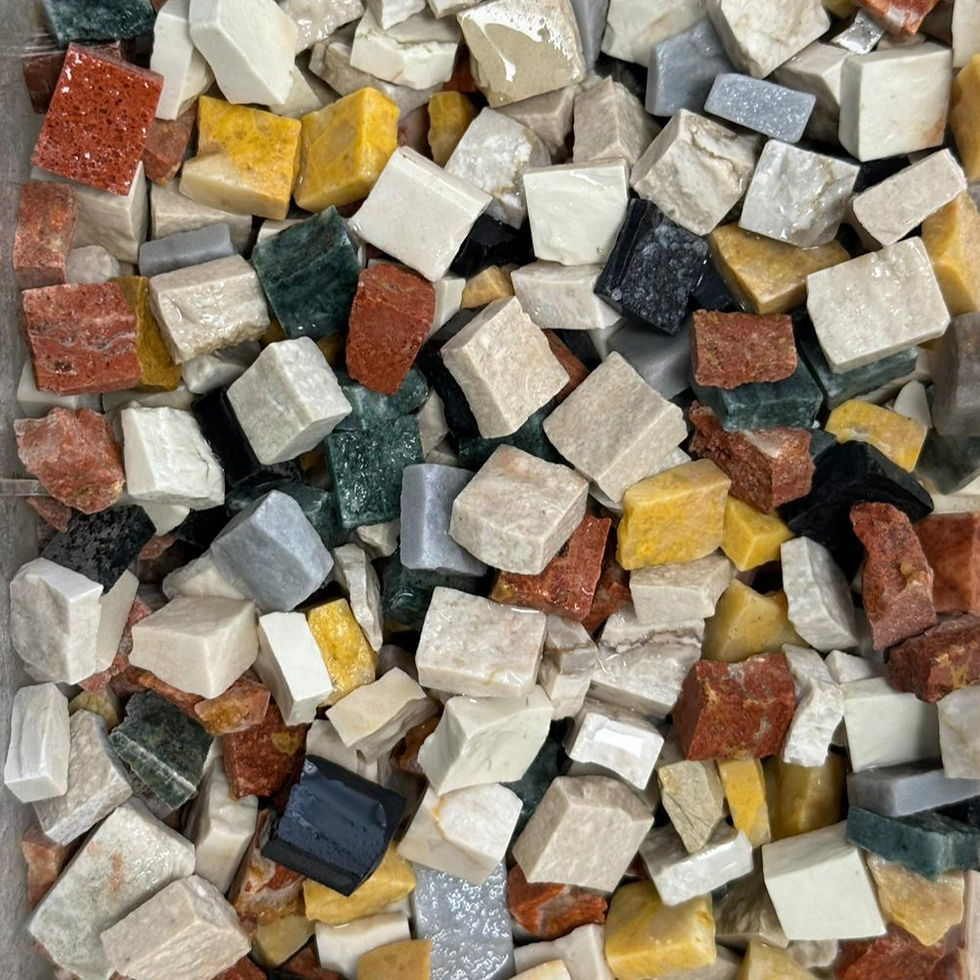
Natural pumice granules are commonly light in color, but depending on their composition, they can be white, cream, gray, green, or black; the latter two are often due to the predominant presence of iron. They are used in cosmetics (where they are known as pumice stone) and in industrial cleaning (stone washing). In construction, they are used to lighten concrete and as acoustic and thermal insulation, both in powder form and in blocks or panels; they are among the materials approved for green building. Other uses include horticulture, as an absorbent and filter for industrial oils, general surface cleaning, and as a light abrasive. They are used in restoration, primarily for finishing furniture with pad polishing, and also for sanding various surfaces (e.g., glass, marble, metal, etc.).


 1 kg pack.
pumice granules
Natural pumice in granules is commonly light in colour, but can take on, depending on the composition, a white, cream, grey, green or black appearance; in the latter two cases often due to the predominantly presence of iron. It is used in the cosmetic field (where it is known as pumice stone) and in the industrial washing field (stone wash). In construction it is used to lighten concrete and as an acoustic and thermal insulator, both in powder and in blocks or panels; It is included in the materials approved for green building. Other uses: floriculture, absorbent and filter for industrial oils, cleaning of surfaces in general and light abrasive. It is used in restoration mainly for the finishing of furniture in pad polishing and also for the smoothing of various surfaces (e.g. glass, marble, metal, etc.).
1 kg pack.